Family Life
Family activities in Brandon, Florida
The family activities that survive real life here are shaded, cheap, close and over before the afternoon storm. This is the full guide.
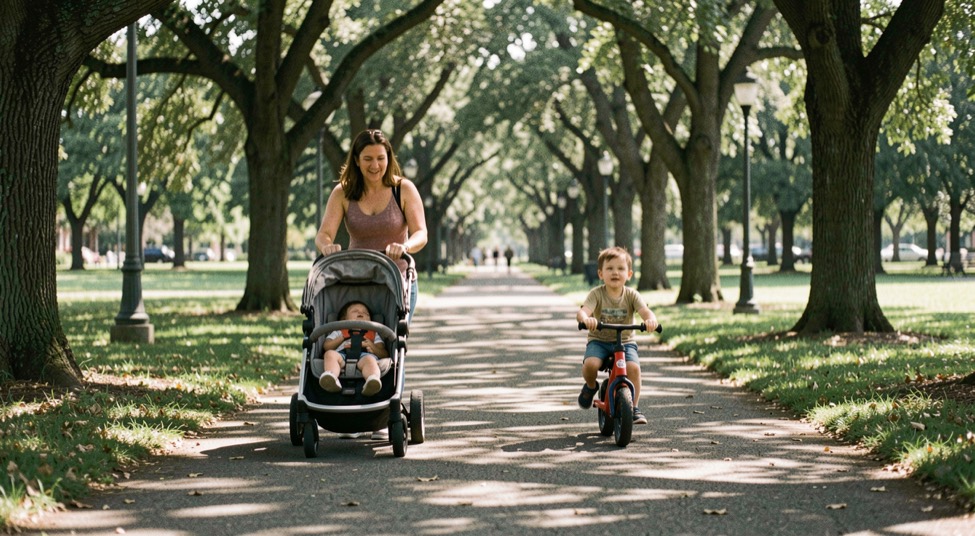
Every family moving to Brandon asks the same question in some form: what do we actually do here with the kids? The answer is more encouraging than the strip malls suggest. Between county parks, a serious library system, youth sports leagues and the indoor backups that Florida life demands, the weeks fill. What follows is our working guide to family activities in Brandon, built around the constraints that matter: heat, distance, cost and the attention span of a four-year-old.
The weekly backbone
Sustainable family life is not built on big outings. It is built on three or four standing appointments that everyone can rely on: a library story time, a playground morning, a splash pad session in summer, a walk that ends somewhere good. These repeat because they work, not because they are exciting. Our list of free things to do in Brandon doubles as a menu for exactly this kind of week, and most of it costs nothing but the drive.
Libraries, leagues and the standing appointments
The library deserves its own paragraph because it solves the two hardest problems in family scheduling: weather and money. Story times run on schedules published in advance, they are free, they are air conditioned, and they double as the gentlest social introduction for children who need practice being in a room with other children. Librarians who have run toddler story time for years are quietly among the most skilled people in any town. For families new to the area, this is the single fastest way to meet other parents: same room, same hour, same stage of life.
Youth sports are the other half of the standing appointment system, and the season machine runs all year: soccer, baseball and softball, basketball, flag football, with registration windows that open months before the first practice. Sign-ups tend to cluster at specific times, so the real parenting skill is knowing when registration opens, not where the fields are. Beyond the recreation leagues, the volunteering guide covers the other side of the equation: every league runs on parents who coach, manage equipment and run the concession stand, and that is where the actual community lives.
Rain plans and heat plans
Florida family planning means two backup lists, not one. The heat plan moves everything earlier: playgrounds by eight in the morning, splash pads as the compromise, indoor options after lunch. The rain plan matters most in summer, when an afternoon storm cancels more outings than any schedule conflict: the library, an indoor play space, a bakery with a tolerance for children, and the crafts drawer at home. Our summer with kids guide goes deep on both lists, because summer here is its own discipline.
The quiet wins nobody mentions, worth collecting on purpose:
- The empty weekday playground at nine in the morning, before the heat and the crowds.
- The boardwalk trail where a toddler can walk in one direction for twenty happy minutes.
- The market morning that ends with a shared pastry and no other plan.
- The drive to nowhere that becomes a nap for one child and quiet for the parent.
The ages change the map
| Era | What fills the week | Planning note |
|---|---|---|
| Toddler years | Playgrounds, splash pads, story time, stroller loops | Morning only, nine months of the year |
| Elementary years | League sports, library crafts, first real trails | Registration windows open months early |
| Middle and high school | Practices, games, jobs, volunteering hours | The parent role moves to the sideline and the carpool |
The activities themselves rotate as children grow, and it helps to plan in eras. The toddler years belong to playgrounds, splash pads, story time and any loop you can walk with a stroller. The elementary years open the league sports, the library craft programs and the first real trail hikes. The middle and high school years shift the balance toward practices, games and the volunteer roles that parents age into, which our volunteering guide covers. Nothing needs to be solved at once; the town simply keeps offering the next size up as children reach for it.
Choosing what is worth the drive
Distance works differently with children aboard. Our rule of thumb: anything under fifteen minutes is a weekday option, anything under forty is a Saturday option, and anything beyond that needs to justify itself against nap time and the drive home in traffic. The day trips guide sorts the wider region with exactly that filter, and the tour of neighborhoods and parks covers what is close to home. For the routines that hold the week together, the weekend plans playbook puts it all into a realistic Saturday and Sunday.
Common mistakes to avoid
Family scheduling here fails in familiar ways. The big one is planning outdoor time after lunch between May and September, which the heat cancels before the day starts. The second is signing up for a league without checking the practice schedule, then discovering that a Tuesday-and-Thursday season has eaten the whole week. The third is building the week on one big outing instead of the cheap standing appointments, which exhausts the budget and the children in the same stroke. And the subtle one: treating the library as a bookstop rather than the free, air-conditioned program engine it is.
Correct for those and the week almost assembles itself: two standing appointments, one water moment, one slow hour, everything inside fifteen minutes on school days. The town supplies the rest, and the supplies are better than the strip malls advertise. That is the honest state of family life around Brandon, and it improves every year you know the map.