Family Life
Summer in Brandon, Florida with kids
A Florida summer with children is not a season, it is a strategy. Here is ours, hour by hour, storm by storm.
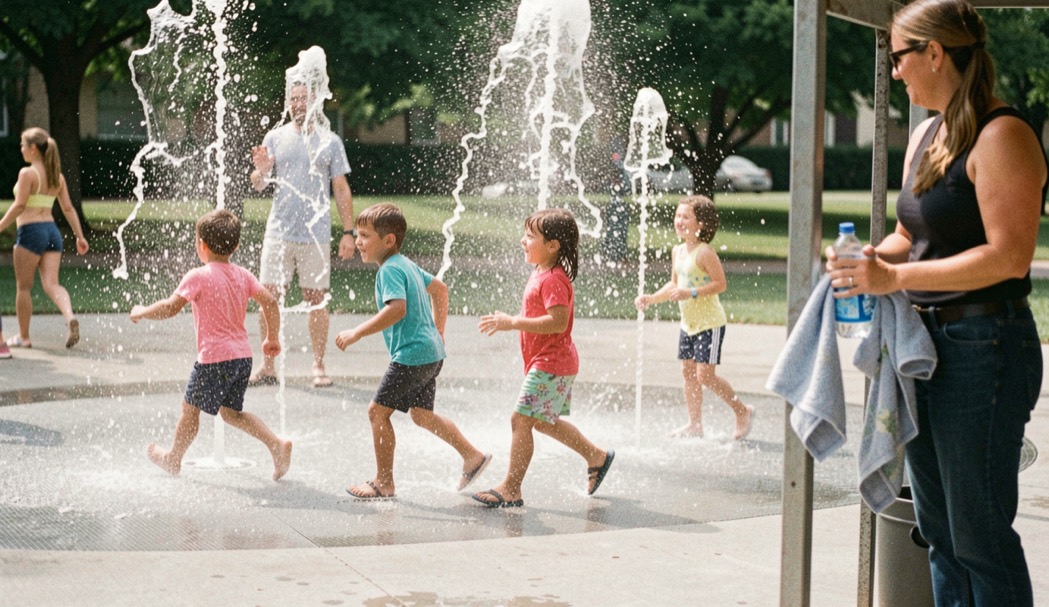
Summers in Brandon are long, hot and humid, with a storm most afternoons and a heat index that makes noon feel like a wall. Families who thrive here do not fight the season; they reorganize around it. The day gets taller at both ends, water becomes the main event, and the afternoon belongs to air conditioning. This guide is the strategy, learned the honest way by the households that live it every year.
The shape of a summer day
Think of the summer day as two outdoor windows and one long indoor middle. Early morning, from shortly after sunrise to about ten, is prime time: playgrounds, walks, bike loops, market mornings, anything that needs to happen outside. From late morning to late afternoon, the day moves indoors: naps, library programs, crafts, the quiet hours. Around five or six, if the storms have passed, a second short window opens for a shaded walk or a swim. Households that respect this shape have good summers. Households that schedule a playground at one in the afternoon do not.
Water, in order of usefulness
- The splash pad: free, fenced in the good ones, and social for parents too. Arrive at opening.
- The public pool: swim lessons are the single best summer investment available here.
- The backyard hose and the kiddie pool: unglamorous, undefeated.
- Rivers and springs: a weekend drive away, and worth it; the day trips guide covers the directions that reward the drive.
The library summer reading program
Every summer the regional library system runs reading programs for children, with logs, prizes and events tied to participation. It is hard to oversell what this does for a family's indoor hours: it gives the middle of the day a spine, it keeps reading alive through the school break, and the associated events fill a weekly calendar for free. The library branch becomes summer headquarters for the households that discover it. Pair it with the story time rhythm described in our family activities guide and the indoor problem is largely solved.
The shoulder weeks are the secret
The best outdoor days of a Brandon summer are not in July; they are at the edges. The first weeks of June and the last weeks of August behave like bonus spring: the storms have not locked in, or have just loosened their grip, and the crowds have not arrived or have already gone home. Savvy households save their ambitious outings, the long trails, the all-morning park days, the first big swim trips, for those shoulder weeks, and spend deep summer on routine. It is the single most useful scheduling trick the season offers.
And the one day that refuses the whole strategy deserves its own respect. The Fourth of July is summer's biggest commitment, and it is the one day the whole town spends outside anyway. Our Fourth of July guide plans it hour by hour: parade timing, the cookout gap, where to watch fireworks and how to get home afterwards without losing the will to live. If you do one big outdoor day in July, that is the one.
Storms and survival notes
The storm rule deserves its own paragraph, because afternoon thunderstorms in Florida are reliable enough to plan around and violent enough to respect. Lightning is the real rule: when it comes, outdoor activities end, full stop. Keep a storm shelf at home, crafts, puzzles, a batched movie, and treat the first rumble as the signal rather than the warning. The skill worth teaching children is not avoiding storms but reading the sky: the tower building in the west at two in the afternoon means the splash pad session is already over.
| Problem | Working answer |
|---|---|
| Heat before ten | Everything outdoor happens in the first window |
| The long indoor middle | Library programs, reading logs, crafts, rest |
| Daily storms | Storm shelf, first rumble ends the session |
| Sibling friction | Separate quiet hour, water in the afternoon |
| Parent exhaustion | One planned thing per day, not three |
The summer kit, packed once and refilled all season:
- Water bottles that live in the freezer, one per child.
- The storm shelf: crafts, puzzles, and one batched movie choice.
- Sunscreen that travels, plus one spare in the car.
- Towels and a dry shirt bagged in the trunk from May to September.
- The library cards, because the reading program is the spine of the indoor middle.
Summer here rewards households that lower their ambitions and raise their preparation. One good morning outing, one solid indoor block and one water moment make a full day. For how the rest of the year relaxes into the outdoor season everyone waits for, see the seasonal calendar, and for the weekly routines that carry the school year, the core family guide has the backbone.
Common mistakes to avoid
The summer mistakes are seasonal versions of ordinary ones. Planning the big outing before checking the storm radar is the first, and every household pays for it once. Letting the reading log lapse in June is the second, because the library program works best as the whole-indoor-summer spine rather than a July rescue. Competing with the neighbors' calendar is the third: a quieter summer with two standing water moments beats a maxed-out one nobody enjoys. And forgetting that September here is still August costs the households that packed the pool bag away too early.
Run the season as a strategy instead of a sentence, two outdoor windows, one indoor spine, water wherever it fits, and the longest season of the Florida year stops being something to survive. The children remember the splash pad mornings and the Fourth; the logistics stay invisible, which is exactly how the households that thrive prefer it.