Local Groups
Volunteering in Brandon, Florida
Volunteering is the shortest path into a town’s life, because working beside people breaks ice that conversation cannot.
Every community magazine says volunteering matters. Fewer say exactly where to start, what the shift actually looks like, and how to avoid the burnout that comes from saying yes to everything. This guide does that for Brandon: the places that reliably need hands, the time commitments each one implies, and how to turn a good intention into a standing appointment you keep.
Food pantries and hunger relief
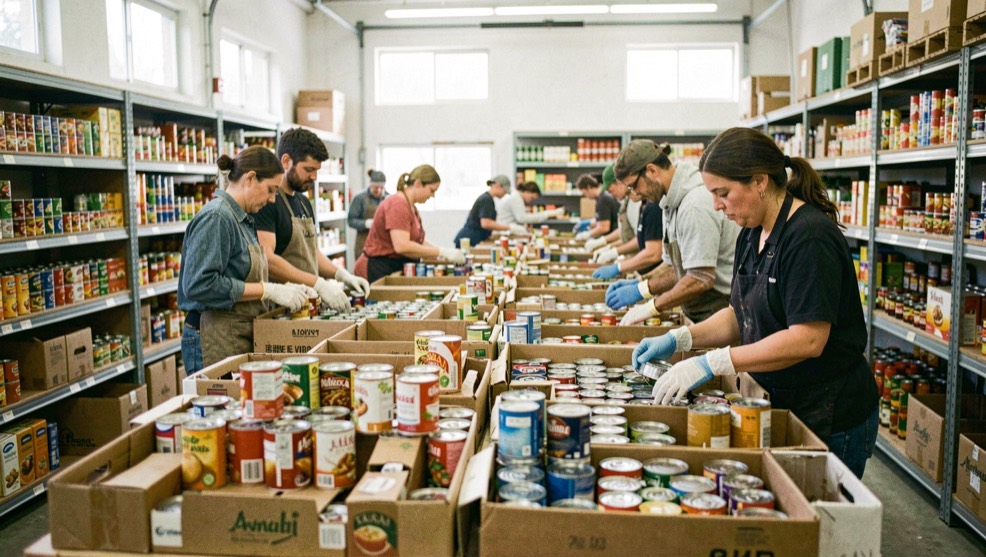
Food security work is the backbone of local volunteering everywhere, and this area is no exception. Pantries need sorters, packers, drivers and weekend crews, and the work is immediate in a way few volunteer jobs are: the box you pack is the box someone carries home that day. Fall is the heaviest season, with holiday drives stacking on regular distributions, which is why our community calendar guide flags October and November as the months to show up. The work suits every fitness level and most ages, with family-friendly slots for older children under supervision.
Youth programs and sports
Youth sports leagues run on parents and retired coaches, and the jobs are concrete: coaching a team, managing equipment, running fields on Saturdays, coordinating the snack schedule that somehow holds civilization together. Beyond sports, mentoring and after-school programs need reliable adults, and reliability is the entire qualification; programs would rather have one steady Tuesday than four enthusiastic ones. If your interest is specifically the club side of town life, the joining guide covers how boards and civic groups absorb new members.
Parks, libraries and the quiet roles
The county's park system benefits from organized cleanup days, invasive plant removal crews and adopt-a-trail arrangements. These are the best-conditioned volunteer jobs available: outdoors, social, and finished in a morning with visible results. They also pair naturally with family life, since children can genuinely help. Our tour of neighborhoods and parks around Brandon explains how the park system is organized, which makes it obvious where helping hands matter most.
The quieter roles fill the rest of the map:
- Library friends' groups: shelving support, book sales, program staffing.
- Schools: reading buddies, event chaperoning, classroom prep that teachers never have time for.
- Senior centers and care homes: visiting, activity support, the undervalued work of simply showing up.
- Animal rescue: fostering, transport, adoption-day chaos management.
Choosing honestly
| If you have | Start with | Typical rhythm |
|---|---|---|
| Two hours a month | Park cleanup or library sale | One scheduled morning |
| A free weekday morning | Food pantry sorting | Weekly or biweekly shift |
| A Saturday season | Youth sports support | Weekly, season-bound |
| A skill, accounting, legal, trades | Nonprofit boards and clinics | Monthly meetings plus tasks |
| Children in tow | Cleanups, food drives, foster care support | Event-based |
Crews, colleagues and honest limits
Group shifts are the underrated format of local volunteering. Most organizations would rather place four people who know each other than four strangers, because crews that arrive together come back. That makes volunteering the natural extension of a friendship, a book club or a workplace: pick one organization, pick one date, and make it a standing thing twice a year. Families with teenagers get particular mileage here, since service hours that schools expect can be earned beside people the student already knows, turning an obligation into a habit.
Before saying yes to anything, the five honest questions:
- How many hours a month, actually, including the driving?
- Is the commitment for an event, a season, or open-ended?
- What happens when I miss a shift, and who covers?
- Can I bring my children, and at what ages?
- Would I still come if nobody I knew were here?
The failure mode of generous people is joining three boards and burning out in a year. The guardrails are simple. Choose one recurring commitment rather than several vague ones. Ask what the actual time expectation is, in hours, before saying yes. Give yourself one season, then decide. And treat event-based helping, the food drives and festival weekends described in our community gatherings guide, as the pressure valve that lets you say no to the standing roles without guilt.
Common mistakes to avoid
Volunteering goes wrong in generous ways. Saying yes by email before asking the hours is the first, and it produces most of the burnout stories in town. Starting with the most visible role, the board seat, instead of a shift, is the second. Ignoring the fall surge is the third: October and November need twice the hands, and the pantry crews who learn your name in the quiet months are the ones who get the good seasonal roles. And quitting by fading away is the quiet one; telling the coordinator you are done for the season is how the town keeps working.
Volunteering is the most efficient social technology a town has. Two hours of sorting cans with strangers produces more familiarity than months of waving across the street. It is also the honest answer to the newcomer's question of how a place becomes home: you join the work, and the belonging follows. Start with one shift this month, and see whether the calendar of the seasonal year does not begin organizing itself around it.