Local Groups
How to find and join local groups in Brandon
Every town keeps its groups half-hidden in plain sight. Finding them is one afternoon of work; joining them is one visit.
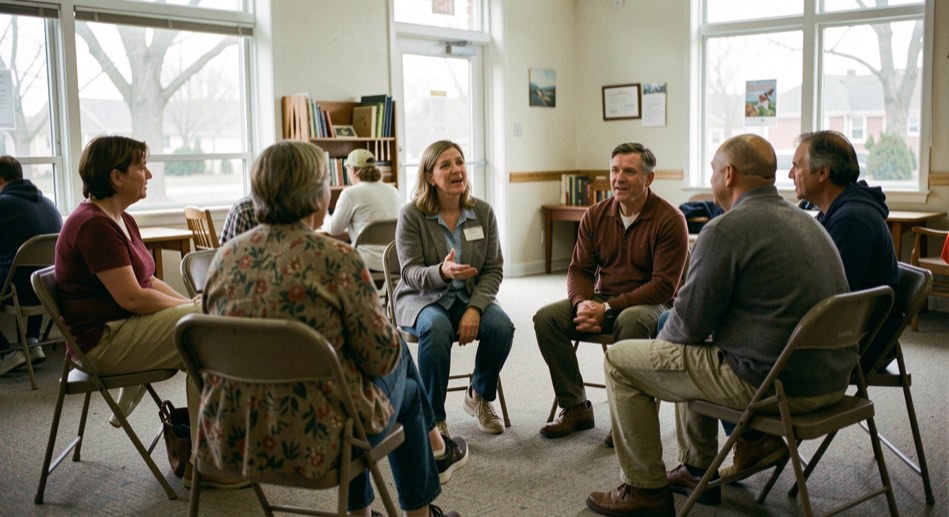
Joining a local group is the highest-return social move available in a town like Brandon, and also the one people postpone the longest. The good news is that the mechanics are simpler than the hesitation. Groups here announce themselves in predictable places, they are used to newcomers, and almost every one of them would rather have you show up awkwardly than not at all. This guide covers where to look, how to arrive, and what to expect from the first three visits.
Where groups actually announce themselves
Forget search engines at first; local life runs on four channels. The library, whose community boards and program calendars list clubs that meet in meeting rooms. The county parks and recreation listings, which carry the sports leagues and their registration windows. The markets and community boards, where paper flyers still do real work; we noted in the farmers market guide that the market board is the best single source in town. And social media groups organized around the town itself, which are noisy but current. Cross-reference anything you find: a group that appears in two channels is alive, one that appears only in an old listing may not be.
| Channel | What you find there | Watch for |
|---|---|---|
| Library boards and calendars | Clubs that meet in meeting rooms, with dates | Rooms book out a month ahead |
| County park listings | Sports leagues and their registration windows | Sign-ups close early, seasons fill |
| Market and community boards | Paper flyers: the best single source in town | Photograph anything with a date on it |
| Town social feeds | Current chatter for Brandon, Valrico and Bloomingdale | Noisy, but nothing is more current |
The kinds of groups you will find
- Service clubs and civic groups: the ones that run scholarships, park cleanups and the events everyone attends.
- Hobby circles: book clubs, craft and quilting circles, garden clubs, board game nights. Our hobby clubs guide covers these in detail.
- Support and identity groups: new-parent groups, caregivers' circles, neighborhood associations.
- Faith-based and congregational groups, which function as major community hubs here; see our neutral overview of faith communities in civic life.
- Volunteer corps: food pantries, youth programs, animal rescue. The volunteering guide maps where the need concentrates.
How to show up the first time
The first visit has three rules. One, contact ahead if the listing asks for it, and skip the email if it does not; a group that says "visitors welcome" means it. Two, arrive five minutes early, which gives you the pick of seats and the greeting ritual instead of the interruption. Three, plan to say one true sentence about why you came, which is all anyone will ask. Nobody expects commitment on a first visit, and the person who waves you toward the coffee is doing it for the fifth newcomer this month.
The first month, alone or with the family
Expect the standard arc. The first visit is names and surface. The second is where you start matching faces to stories. By the third or fourth, you have a usual seat and someone saves it. Groups that feel impenetrable from outside are almost never closed; they are simply settled, full of people who joined years ago and stopped needing to explain themselves. Give it a month before judging the fit, and give yourself permission to try two groups for the same interest, because the people matter more than the topic.
Both work here, differently. Coming alone is completely standard in Florida towns where so many residents arrived from somewhere else; half the room is also from somewhere else. Coming as a family fits naturally with youth sports and the school-adjacent groups, and the volunteering route is the fastest family entry, because working beside people breaks ice that conversation cannot. The volunteering guide lists which organizations take families with children. One practical note: most civic and hobby groups carry modest annual dues, and nearly all of them quietly waive them for anyone for whom they are a barrier, so money should never be the reason you stay away.
Starting something when nothing fits
If the group you want does not exist, the library meeting room is the classic birthplace of local groups: a flyer, a date, a standing reservation. Announce it on the same four channels above, expect six people at the first session, and know that a group of six that meets monthly is a real group. The town calendar in our community events guide shows how fast a standing event becomes an institution once it holds a slot for a year.
Common mistakes to avoid
The joining mistakes are mostly hesitation in costume. Researching for three months without visiting is the big one; a group is known in one evening, not in forty screenshots. Visiting the busiest meeting of the year first is the second, because the budget night or the holiday party is the hardest room to read. Judging a group on visit one is the third, since every circle has an off night. And waiting to be personally invited is the quiet classic: local custom runs on flyers and open doors, not on invitations anyone owes you.
The whole system rewards one modest act: showing up once, saying one true sentence, and letting the room do the rest. Do that at two or three groups across a season and the town changes size, from a place you live to a place you are part of. That is the entire promise of this section, and it costs one evening at a time.